How to Build a Better Team Around You
“I want to build a better team around me, but I’m unsure how.”

I spoke with a CEO yesterday who’d just crossed $5M in ARR. The product-market fit was solid, and GTM was showing early signs of repeatability. She had a good head of marketing in place and had just brought in a product marketer to support growth.
I asked her what felt hardest right now.
She said: “I want to build a better team around me, but I’m unsure how.”
We started unpacking it. Not in a crisis way, more in the sense of, “What does building a better team around me actually look like from here?” Is it about hiring differently? Getting clearer on what people are responsible for? Tightening up how decisions are made?
What we landed on was that the next phase of work wasn’t about being more hands-on or stepping back. It was about putting the right structure around the leadership team she’s trying to build and not adding processes for their own sake, but creating the kind of environment where capable people can execute together.
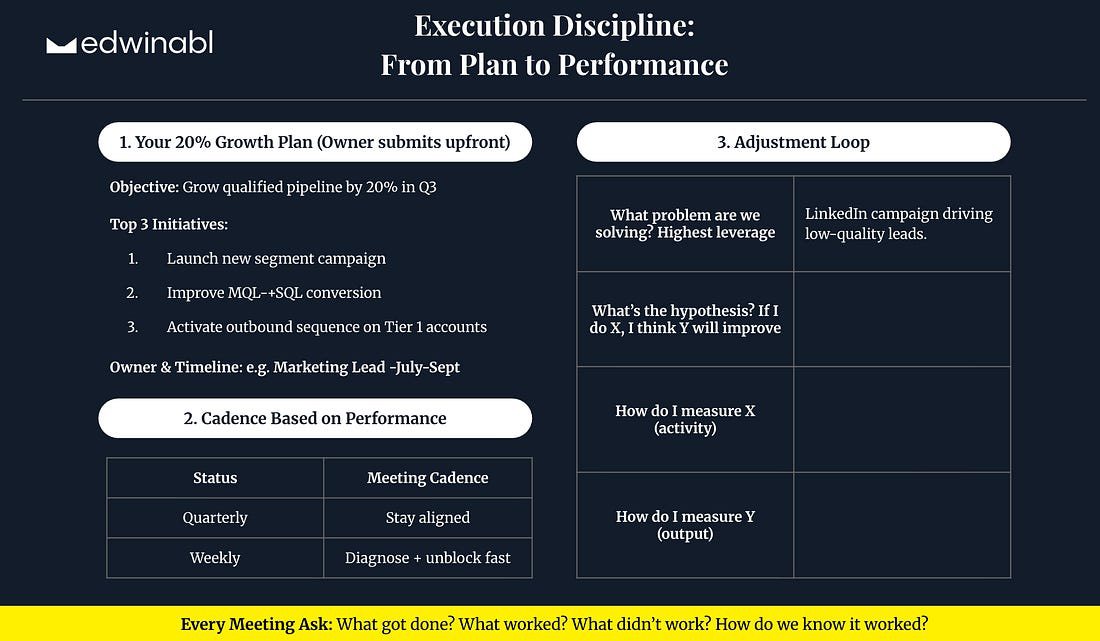
This shift happens as you move from early team momentum to building a proper leadership layer. It starts with getting clear on the GTM plan, something everyone can point to and say, “This is what we’re running.” It needs a rhythm: not just recurring meetings, but a cadence in which priorities are reinforced, and blockers are removed. And it needs shared standards for what “good” looks like, so people aren’t just busy but aligned on what outcomes matter.
Because without that structure, even strong people will start doing their version of what they think is right. You’ll get energy but not alignment. And that’s when things start to slow down.
The Paralysis of Intelligence
One of the hardest parts of scaling isn’t learning how to run every department. It’s figuring out how to build a team around you that can run those functions better than you and giving them what they need to succeed.
This is where most CEOs get stuck. They hire smart, experienced people, but execution starts to feel slower rather than faster. Priorities blur. Decisions stall. Everyone’s doing good work, but it’s not adding up the way it should.
The default advice, hire great people and get out of the way, only works if the environment is already set up to support them. And more often than not, it isn’t.
What Works
When things feel slow, the instinct is often to hire someone else. Another VP. Someone who’s “done it before.” But if the structure isn’t there, even the most experienced hire won’t create momentum. They’ll just add another layer of weight.
What works is getting a few core things right:
First, align around one GTM motion (i.e. each functional area). Not a mix of strategies. Not multiple “priorities.” One clear motion the whole company understands and is committed to.
Second, define ownership clearly. Scorecard leadership you can call it. Each person on the team should know exactly what they’re responsible for, and those responsibilities should relate directly to outcomes on a scorecard.
Third, run a weekly rhythm that creates movement. A working cadence that sets priorities, surfaces blockers, and leads to real decisions — not just updates or status reports.
And as you think about who to hire or promote, look for people who naturally simplify. The ones who don’t overcomplicate things, bring clarity to messy situations, and quietly get on with it. That’s what keeps the company moving.
When those things are in place, execution speeds up. You don’t need to be an expert in sales, marketing, or product. You need to create a structure that lets your team operate at pace.
How to Use Not Knowing as an Advantage
I talked with another CEO last week who’d just made two strong hires. But instead of feeling confident, she felt more anxious. She didn’t know what good looked like in their roles, so she couldn’t tell if they were succeeding. And because she couldn’t tell, she kept pulling decisions back to herself.
That’s the trap. Not knowing what great looks like in a function isn’t the problem. Trying to stay in control because of it is.
Not knowing the detail isn’t a gap to fill. It’s what stops you from micromanaging people who know more than you. The CEOs who scale well aren’t the ones who become functional experts. They’re the ones who stay curious, ask better questions, and resist the urge to have the answer.
When someone says “this is best practice,” ask whether it’s working here, now, for your business. When someone on your team says “why don’t we just try this,” take it seriously. Fresh thinking usually comes from people who aren’t carrying the weight of how things are supposed to work.
You don’t need to know everything. You need to build an environment where smart people figure it out together and feel confident acting on what they find.
That’s the job.
Action, action, action:
For investors, operating partners, and heads of platform: here are three practical things to check this week:
1. Ask the CEO who on their leadership team is ready to run something bigger. Not who’s performing well now. Who could take on more scope in the next 12 months? If they can’t name someone quickly, they’re not thinking about team development yet. That’s the gap.
2. Ask the CEO what they’ve changed about how they run the team in the last 90 days. Not what the team has done. What the CEO has changed. If the answer is nothing, the structure around the team isn’t evolving. That’s usually why execution starts to slow down before anyone notices.
3. Find out how the CEO handles a decision their team gets wrong. Do they take it back, or do they use it to build judgment in the team? The answer tells you whether this CEO is building a team or just managing one. Those are different companies at Series B.
For CEOs: your 3-step prompt this week:
1. Ask each person on your leadership team what their number one priority is this quarter. Write down what they say. If the answers don’t connect to your top priorities, you have an alignment problem, not a hiring problem.
2. Pick the meeting where decisions go to die. You know which one. Cancel it or redesign it. Replace it with a 30-minute session where the only agenda is: what’s blocked, who’s unblocking it, and by when.
3. Audit your leadership rhythm. What’s the actual cadence for reviewing priorities and making decisions? If your team meetings are mostly updates, and nothing is getting unblocked or clarified, you’re missing the lever.
If you’ve hired good people and things still feel slow, the answer is your system. If you want to build the team, follow this advice on building the system.
Build the system. That’s what scales.
Reading is free. Waiting isn't.
If an essay hit a nerve, that nerve is usually worth an audit.
Book a callGet the essays before your competitors do.
New essays land here first. Free, weekly, unsubscribe whenever.