How to Improve GTM (two bucket method)
A simple way to see how a portfolio company's GTM flywheel actually works.
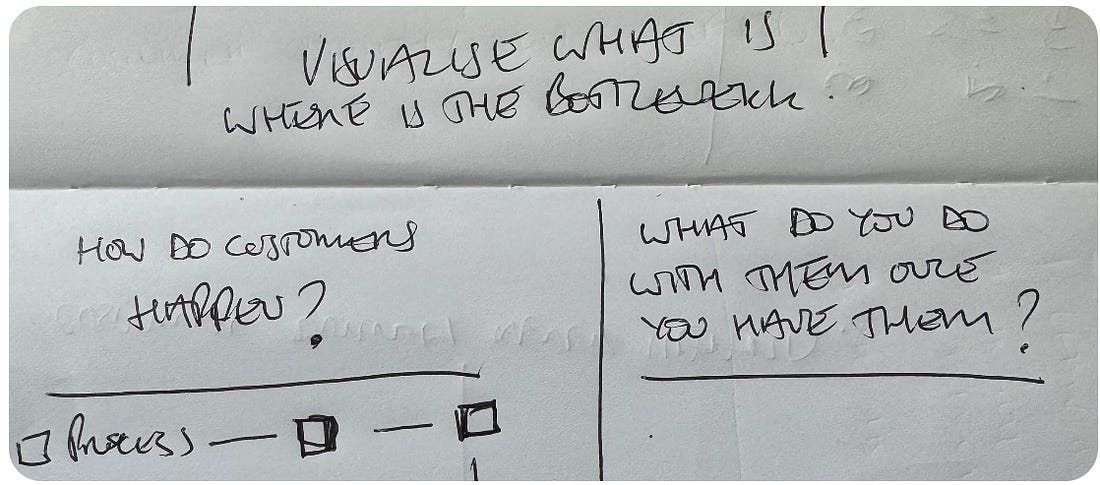
So, the big problem with portfolio companies is that it’s often hard to understand their go-to-market (GTM) flywheel and how it works. When they explain it to you, it can feel complex, and they’re not aware of the pain points and blockages within their strategy and the execution behind that strategy.
This means that you often get an expert to provide a view of what works and what doesn’t and an understanding of whether that portfolio company is executing the right strategies. Most companies fail to get to the root problem or root causes because they don’t simplify how they acquire business and treat customers. They usually approach this through an audit process or by designing new go-to-market models. They believe this fixes the problem of how to get to the next stage of growth and evolve their marketing, go-to-market, and customer experience.
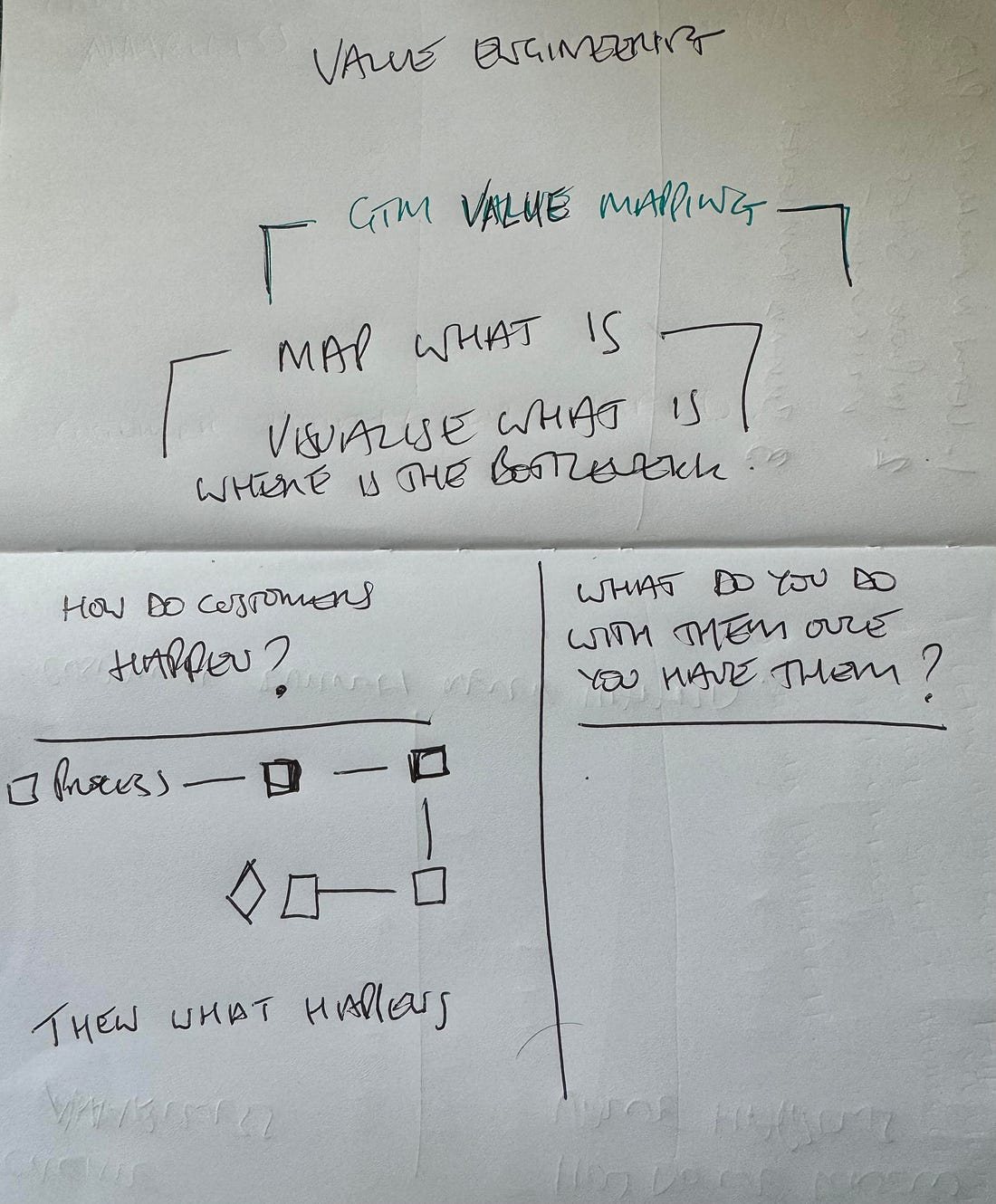
That doesn’t work because it doesn’t address the fundamentals or make it lean and simple to understand. Instead, I would encourage your portfolio companies to practice GTM Value Engineering. This involves visualizing the current bottlenecks within their process without immediately trying to diagnose or devise a strategy. It is about visualizing what’s happening, not diagnosing the problem.
Here’s how it works
Divide their thinking into two buckets. Bucket one is “How docustomers happen?” That’s simple. What’s the process right now for gaining a customer? Process map that out and figure out where the problems are in that process and what can be done to scale it. A simple process map, similar to a technical one: this happens, then this happens, leading to customer acquisition.
The second part of the process map is understanding, “What do you dowith customers once you have them?” A similar process map takes the customer journey from where they bought to what you do with them after they’ve bought. Simple steps: they sign here; this is their onboarding; this is how we treat them, and this is what we do with them post-signing.
By understanding how well your process aligns with your customer interactions, you can start to diagnose the bottlenecks. This approach can lead to an enhanced customer experience journey, opening up better upsell and cross-sell opportunities, reducing churn, and increasing customer retention. The potential benefits are significant, making this exercise a worthwhile investment for your portfolio companies.
Action action action:
Get your portfolio companies to perform this simple exercise:
Create a process map for how do customers happen (right now): Break down the current steps for gaining a customer. Identify problems and potential scaling options.
Create a process map for what you do with customers once youhave them: Detail what happens after a customer signs, including onboarding and ongoing interactions, to improve their journey and align processes.
Once you’ve defined these processes, you can diagnose the strategy for moving forward, scaling, unblocking challenges, and improving revenue through a better customer experience.
Good luck!
If you enjoyed this read, the best compliment I could receive would be if you shared it with one person or restacked it.
Share
If you want to join a network of 500+ investors, CEOs, and revenue leaders scaling B2B SaaS companies, subscribe to Demand Karma. You’ll get clear, actionable insights to help you make decisions, faster.
Subscribed
Originally posted on edwinabl.com.
Reading is free. Waiting isn't.
If an essay hit a nerve, that nerve is usually worth an audit.
Book a callGet the essays before your competitors do.
New essays land here first. Free, weekly, unsubscribe whenever.